
Southwest Airlines: Assigned Seating and Boarding Explained
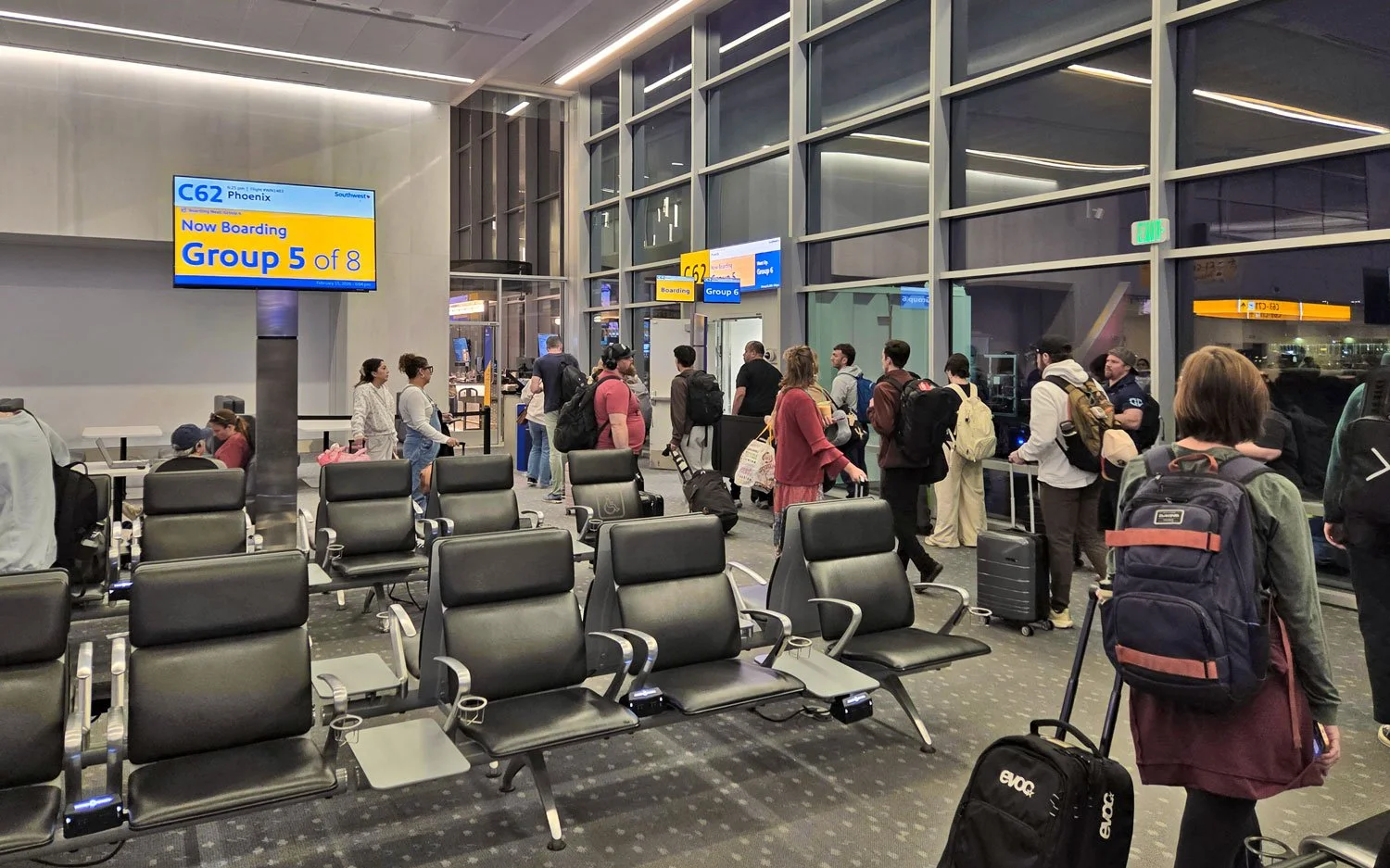
Southwest Airlines’ new boarding process with assigned seating becomes similar to other airlines with eight boarding groups
Image: The Window Flyer
We’ve all done it. Setting an alarm for 5:29 a.m., then groggily opening the Southwest Airlines app to check in exactly 24 hours before departure at 5:30:01 a.m. All to snag an A Group boarding position for the next day’s flight and increase the odds of scoring an exit row or forward cabin seat.
You don’t have to do that anymore.
On January 27, 2026, after more than half a century of open seating, Southwest Airlines switched to assigned seating. Passengers now select seats during booking based on fare type, Rapid Rewards status, and credit card benefits. Boarding is now divided into eight numbered groups rather than the familiar A, B, and C system.
Gone are the days of early alarms, reminder notifications, lightning-fast check-in fingers, and the dreaded C Group boarding position if you forgot to check in. C for center seat in the back, as some used to joke.
Gone, too, are Southwest’s iconic boarding stanchions that once sorted passengers into neat lines of A1–A30, A31–A60, B1–B30, and all the way through C60.
With all these changes at Southwest, how does the new boarding process work for you, the passenger?
How does assigned seat selection work on Southwest?
While many people have probably flown on a variety of airlines (such as Alaska, American, Delta, or United) and are accustomed to the idea of assigned seating, the process and concept may still be unfamiliar to infrequent flyers or those who exclusively fly with Southwest.
Your seat selection(s) will be made either online or in the Southwest Mobile app at the time of purchasing your ticket. After inputting your passenger information, but before making payment, there will be an intermediate step – the seat map page – where you can choose your seat.
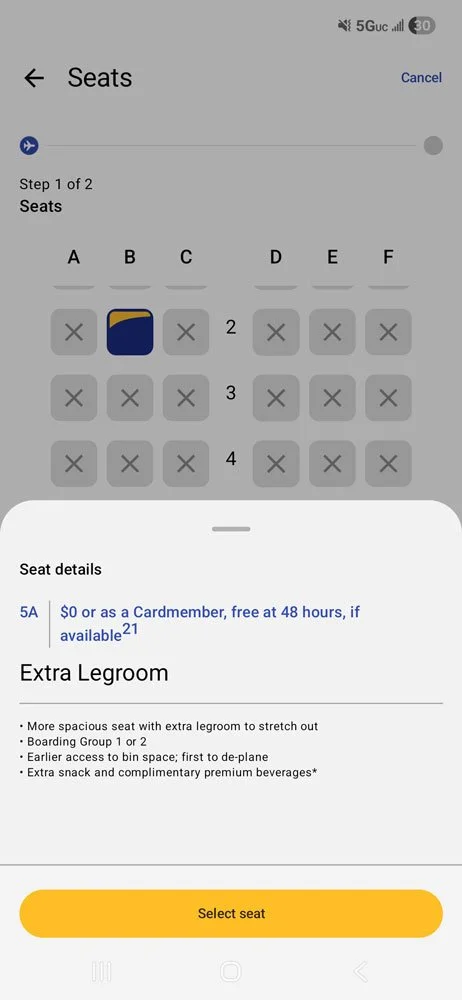
Assigned seats can be selected through Southwest's Mobile App or website at or after booking.
Can you choose any assigned seat on Southwest?
Unfortunately, not every seat will be available for picking; which seats you can choose depends on several factors.
Southwest has chosen to segment its seat selection offerings based on a combination of which fare bundle you purchase, your Rapid Rewards tier level, and whether or not you have one of Southwest’s Rapid Rewards credit cards or not.
There are three primary seat categories on Southwest:
Standard Seat – these are seats in the back half of the plane with standard legroom
Preferred Seat – these are seats toward the front half of the plane, but still with standard legroom
Extra Legroom Seat – these are the forward-most rows of the plane, as well as the exit row, and these seats provide a few extra inches of legroom. Extra Legroom seats also come with additional benefits such as enhanced snacks and complimentary premium beverages.
Fare bundle seating options:
Those purchasing Southwest’s lowest cost Basic fare category will not have the ability to choose a seat; instead, a Standard seat will be assigned at check-in
Choice fare holders only have access to Standard seats on the plane
Choice Preferred fare holders can choose either a Standard or Preferred seat
Choice Extra fares holders can choose any seat on the plane – Standard, Preferred, or Extra Legroom
Rapid Rewards Tier seating options:
A-List: Standard or Preferred seat
A-List Preferred: Any seat – Standard, Preferred, or Extra Legroom
Rapid Rewards Credit Card seating options:
Southwest credit card holders (Plus, Premier, or Priority) receive additional seat selection benefits. The credit card benefits work in conjunction with your chosen fare bundle and Rapid Rewards Tier to determine which seats are “unlocked” and available to you as a passenger at certain junctures of the booking and pre-flight journey – they essentially “layer-on” to the variables described above.

Southwest's Rapid Rewards Priority Card unlocks complimentary Preferred seating as well as opportunities to upgrade for free to an Extra Legroom seat
Rapid Rewards Plus Card: Can choose any available Standard seat within 48 hours prior to departure. The main benefit here is for passengers who book Southwest’s cheapest Basic fare, which does not allow the opportunity to choose a seat in advance.
Rapid Rewards Premier Card: Can choose any available Preferred seat within 48 hours of departure.
Rapid Rewards Priority Card: Can choose any available Preferred seat at time of booking, in addition to having the opportunity to upgrade to any available Extra Legroom seat within 48 hours of departure.
The different permutations of seating benefits can be confusing, so we’ve included a graphic matrix below to present this in a more visual format.
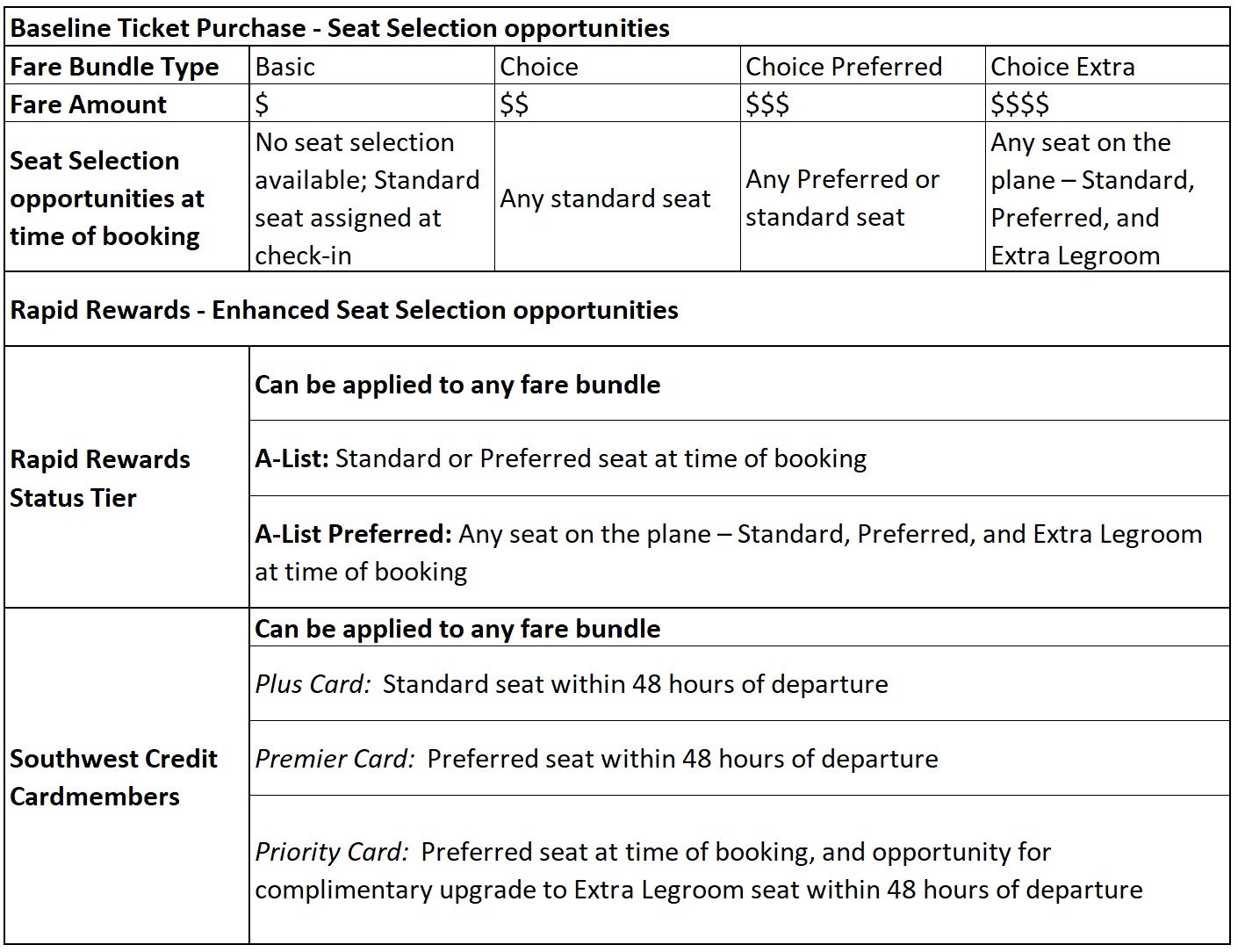
Assigned seating options on Southwest Airlines vary based on fare purchased, Rapid Rewards status tier, or Rapid Rewards cardmember level.
How does Southwest’s new boarding process work?
Southwest’s new assigned seating model also comes with a new boarding process.
The airline has done away with its classic A, B, and C boarding groups, along with its 1-30 and 31-60 sequential numbering. Gone from every airport are Southwest’s iconic numbered pylons (which have resulted in some interesting carpet patching), but the airline still boards passengers with two side-by-side lines where the pylons once stood.
Southwest Airlines had iconic numbered boarding pylons that were used that it used in conjunction with its open seating format.
Image: The Window Flyer
Southwest Airlines’ iconic numbered boarding pylons have been removed with the shift to assigned seating.
Image: The Window Flyer
At its core, Southwest’s new boarding process isn’t dramatically different than before – the two side-by-side lines still alternate turns boarding (e.g. once one line has finished boarding, the other line proceeds to board while the next boarding group begins to line up in the void left behind), just like before.
Southwest Airlines passengers still line up side-by-side in the airline's boarding lanes, minus the iconic numbered pylons, with boarding groups alternating sides, similar to before.
Image: The Window Flyer
The main difference is that today, rather than having six boarding groups (i.e. A1-A30, A31-A60, B1-B30, and so on), Southwest now has 8 general boarding groups, numbered Group 1 through Group 8.
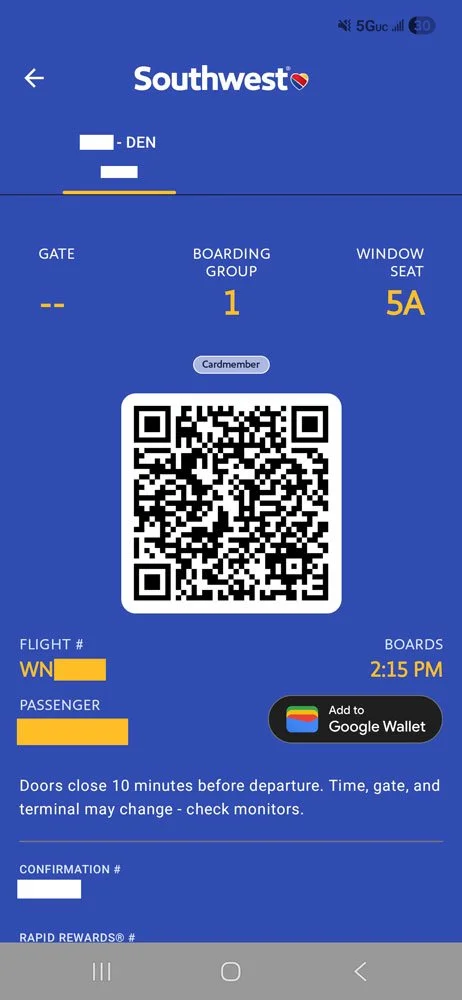
New Southwest Airlines boarding pass with assigned seating indicating a boarding group and seat number.
Image: The Window Flyer
The segmentation of groups is based on a combination of fare bundle, Rapid Rewards tier, and Rapid Rewards Cardmember level:
Groups 1-2 are reserved for A-List Preferred passengers, passengers flying on a Choice Extra fare, and passengers with an Extra Legroom seat
Groups 3-5 are reserved for A-List passengers, passengers flying on a Choice Preferred fare, and all Rapid Rewards Cardmembers who have not yet boarded
Groups 6-8 are reserved for passengers flying on a Choice or Basic fare.
Ahead of the standard boarding groups, Southwest still offers Priority Boarding for those who purchase it, Priority Boarding for active-duty US military members, as well as Preboarding for passengers needing additional time or assistance boarding.
How to purchase Priority Boarding on Southwest
Previously, when Southwest had open seating, it sold various upgrade options to passengers wanting to improve their boarding position to gain early access to overhead bins and greatly improve chances of grabbing their ideal seat.
These upgrade options included:
Selling Early Bird Check-in, which opened up the check-in window for passengers from 24 hours to 36 hours prior to departure
Selling a more expensive Business Select fare bundle which guaranteed an A1-A15 boarding position
Selling Upgraded Boarding positions to fill out any A1-A15 boarding positions that may be remaining as of 24 hours before the flight.
With the implementation of assigned seating, the concept of boarding positions became irrelevant. However, the opportunity to board ahead of Southwest’s standard eight boarding groups still exists through the ability to purchase Priority Boarding, which functionally replaces the former Business Select and Upgraded Boarding options.
Opportunities to purchase Priority Boarding are available beginning 24 hours before a flight and up to 30 minutes prior to departure.
Passengers with Priority Boarding will be allowed to board ahead of Group 1, and similar to Upgraded Boarding, Priority Boarding is sold on a per-segment basis at Southwest.
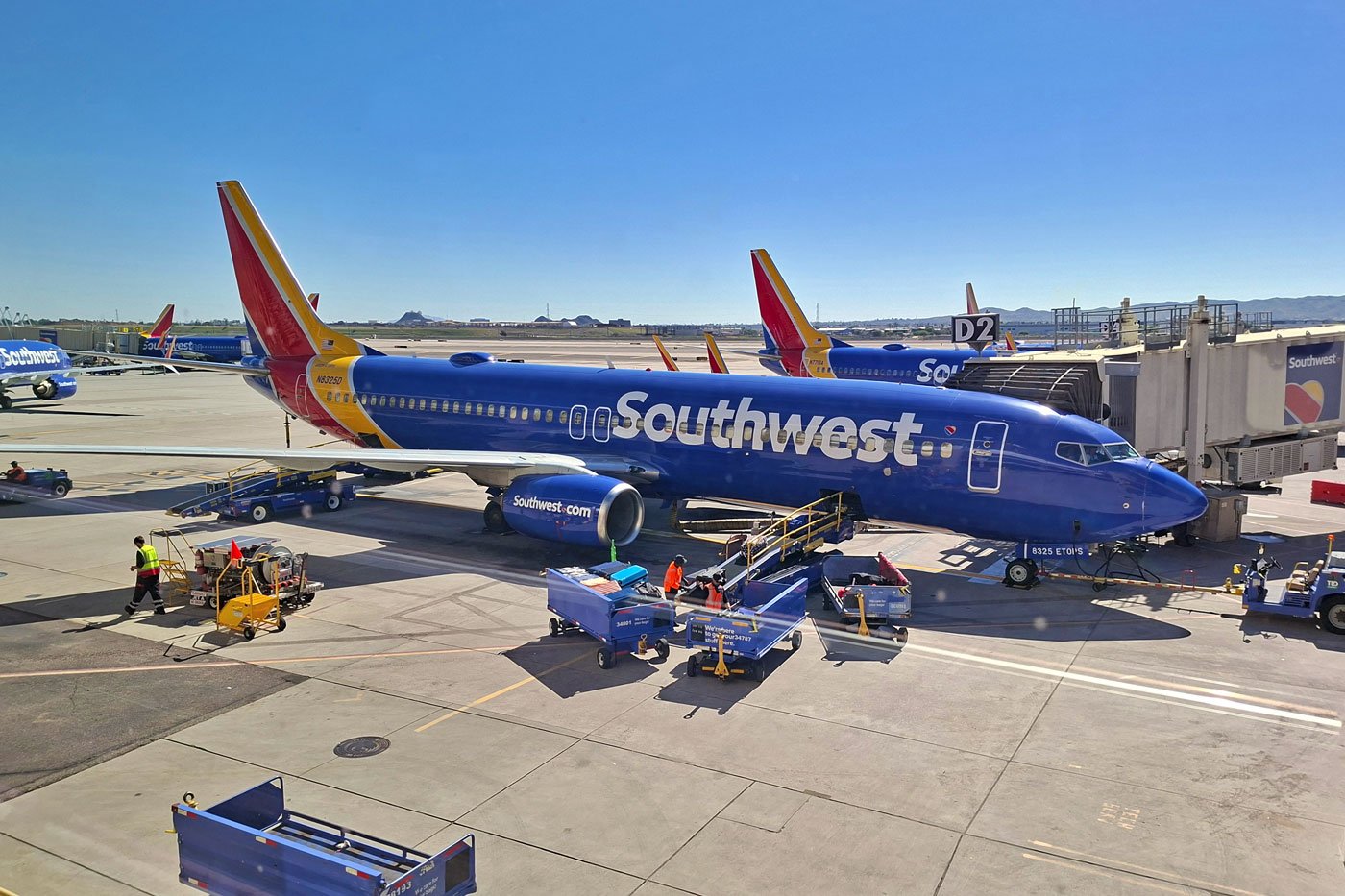
Southwest Airlines aircraft sits on the apron, ready to board passengers into assigned seats.
Image: The Window Flyer
What This Means for Basic Fare Passengers
If you’re booking Southwest’s lowest-priced Basic fare, the assigned seating change affects you the most.
Under the new Southwest assigned seating model:
Basic fare tickets do not include advance seat selection.
A Standard seat is automatically assigned at check-in.
Seat location will depend on availability at that time.
In practical terms, that means Basic fare passengers are less likely to secure forward cabin or preferred seating unless they:
Hold Rapid Rewards A-List or A-List Preferred status
Have a Southwest credit card with seat benefits
Purchase a higher fare bundle
Under the old open seating system, a Basic passenger could still access nearly any seat by checking in exactly 24 hours before departure and securing a strong boarding position.
With assigned seating, access to preferred seats is now more closely tied to fare type and loyalty benefits.
For budget travelers, this makes the decision clearer:
If seat location matters to you — especially sitting near the front or avoiding a middle seat — upgrading your fare or holding a qualifying credit card may now carry more value than before.
If you simply need transportation from point A to point B and don’t mind where you sit, Basic still gets you there at the lowest price.
Closing thoughts on Southwest’s new seating model
Southwest’s pivot to assigned seating marks one of the biggest changes in the airline’s history. It’s a clear shift away from the open seating model that defined the brand for decades, and reactions have been mixed.
On the positive side, the new assigned seating and boarding process may help:
Passengers secure their preferred seat.
If you always want a window, aisle, or seat near the front, you can select it at booking instead of relying on a strong boarding position.
Families and groups sit together.
Assigned seats reduce uncertainty for those traveling with children or companions.
Eliminate 24-hour check-in stress.
No more setting alarms or adjusting your day just to check in exactly 24 hours before departure to avoid a middle seat.
On the flipside, some travelers feel the Southwest assigned seating change:
Removes a major part of what made the airline unique.
For decades, open seating was synonymous with Southwest Airlines.
Creates a bit of a financial divide in seat access.
Under open seating, any passenger could realistically access almost any seat through a disciplined check-in process, regardless of how much they paid for their ticket. With assigned seating, along with fare and cabin segmentation, those who purchase lower fares, nor hold Rapid Rewards status, nor have a Southwest credit card may find their choices limited.
Could slow the boarding process.
With the old system of open seating, passengers could spread out across the plane to relieve chokepoints in the aisle. However, with assigned seating, more aisle congestion is likely as passengers must now maneuver around one another based on their seating assignments.
Ultimately, whether this change feels like an improvement depends on what you value more: the flexibility of open seating or the predictability of assigned seats.
For many infrequent flyers, simply knowing where you will sit may make the airport experience feel calmer.
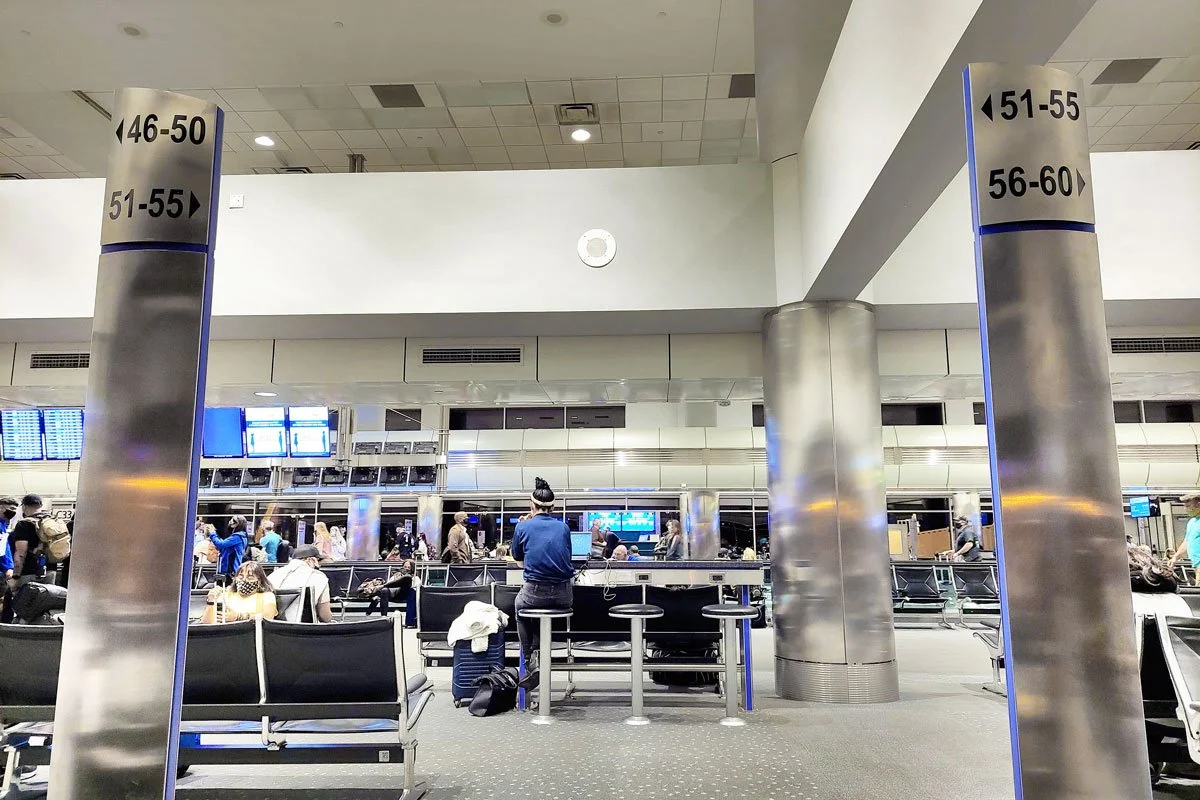
Up-close view of Southwest Airlines' former boarding pylons. Will you miss the old boarding process?
Image: The Window Flyer
Frequently Asked Questions
-
Southwest switched to assigned seating on January 27, 2026.
-
Not via Basic fare alone; A-List, A-List Preferred, and/or Southwest Credit Card holders, have the ability to select a seat at varying time points ahead of travel (see above for details)
-
Broadly speaking, yes, but it is not guaranteed and seating selection is based on availability
-
Southwest now boards with 8 general boarding groups (numbered Group 1 through Group 8), in addition to Pre-boarding and Priority boarding
-
Southwest phased out EarlyBird Check-in with the change to assigned seating since boarding position is no longer tied to better seat selection. Southwest now sells an upgrade called Priority Boarding, which allows passengers to board ahead of general boarding Group 1, for earlier access to overhead bins.
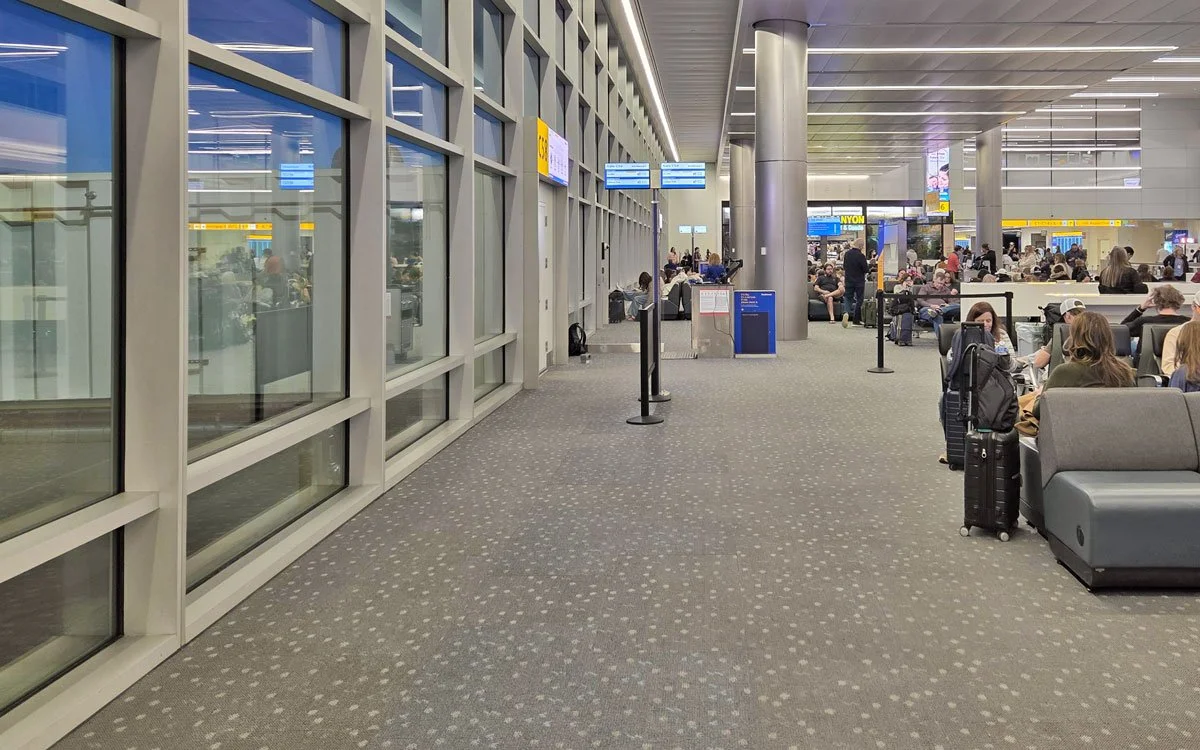
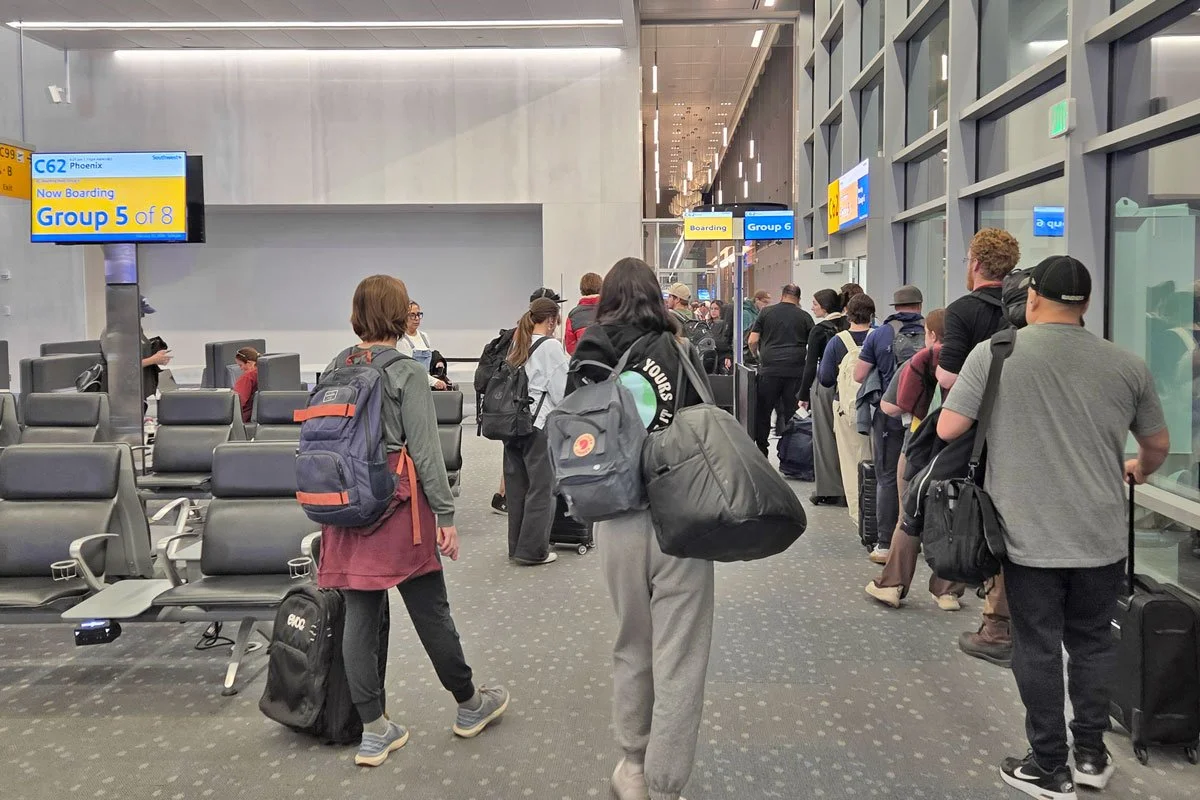
Passengers will still board in two lines at Southwest Airlines after the airline implemented assigned seating in January 2026.
Image: The Window Flyer
Related Content



Making travel plans for the April 8, 2024 Total Solar Eclipse? 4 reasons why Dallas, Texas should be on the top of your choices of viewing locations.